

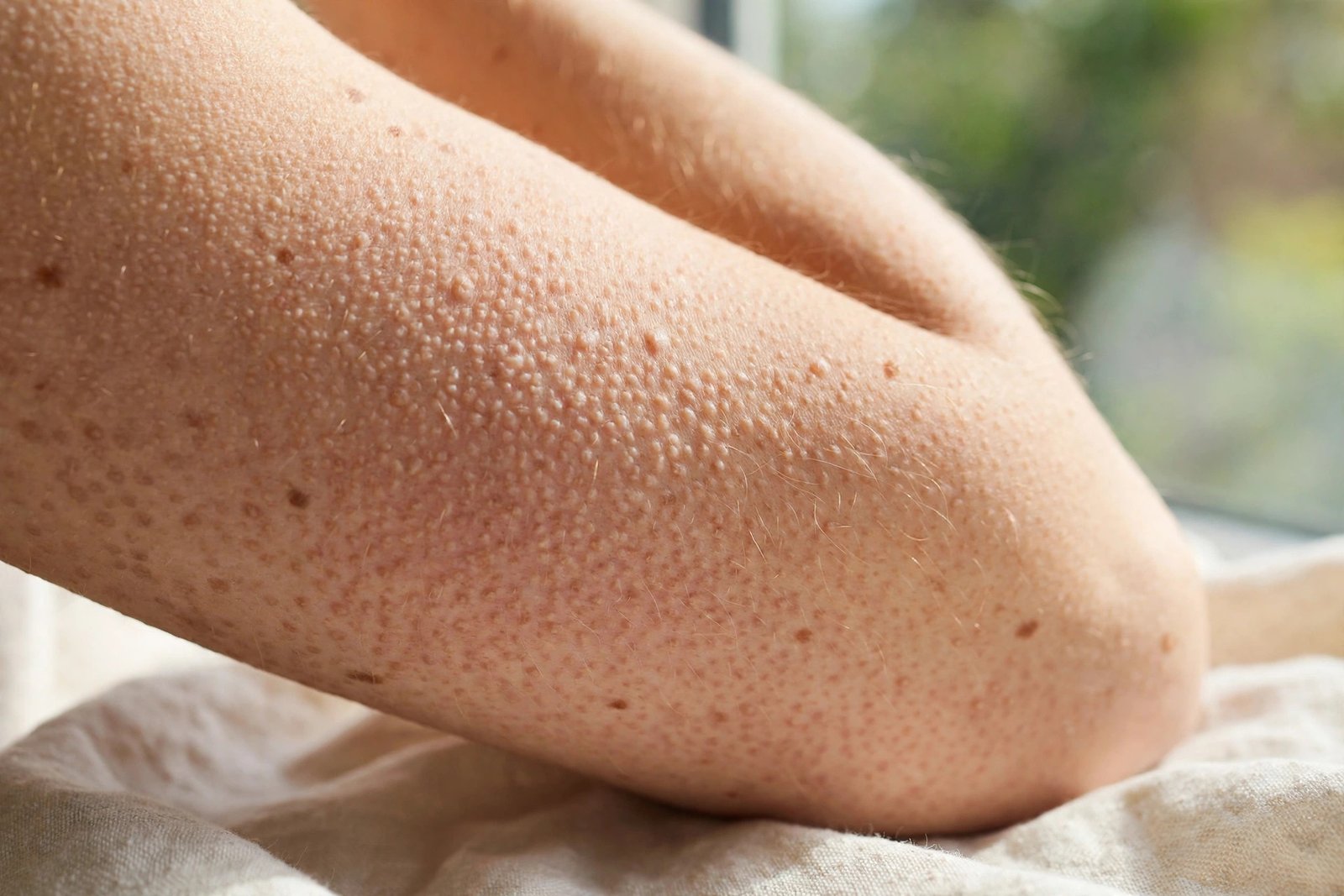
If you have ever run your hand over the back of your upper arm and felt a patch of tiny, rough bumps — like permanent goosebumps that never quite go away — you have probably met keratosis pilaris. It is one of the most common skin conditions in the world, it is not contagious, and it is not caused by poor hygiene. It is, however, stubborn: creams that promise overnight miracles usually disappoint, while the boring, consistent routine is the one that actually works. This guide explains what keratosis pilaris is, why it happens, which treatments genuinely help, what to avoid, and when it is worth seeing a doctor.
What Is Keratosis Pilaris?
Keratosis pilaris, often nicknamed “chicken skin”, happens when keratin — the tough protein that protects your skin, hair and nails — builds up and plugs the openings of hair follicles. Each plug forms a small, hard bump. The bumps are usually skin-coloured, white or slightly red, and they feel rough or sandpapery to the touch. They most often appear on the backs of the upper arms, the fronts of the thighs, the buttocks and, in children especially, the cheeks.
The condition is harmless. It does not hurt, it does not spread from person to person, and it does not turn into anything dangerous. But it can be frustrating, especially in summer when arms and legs are on show, and the redness around the bumps can make the skin look blotchy. Many people also find the texture bothersome even when the bumps themselves are painless.

What Causes It — and Who Gets It?
The exact cause is not fully understood, but keratosis pilaris runs strongly in families, which points to a genetic tendency to overproduce keratin around hair follicles. It often starts in childhood or the teenage years, and it tends to be more noticeable in winter, when cold air and central heating dry the skin out, and calmer in summer, when humidity is higher.
It is also more common in people who have eczema, hay fever or asthma — the so-called atopic group — and in people with very dry skin generally. Hormonal changes during puberty and pregnancy can make it flare. It is not caused by diet, by shaving, or by anything you did wrong, and no amount of scrubbing it away will fix the underlying tendency. That matters because it sets realistic expectations: the goal is smoother, calmer skin, not a permanent cure.
Is It Something Else? How to Tell
Keratosis pilaris is sometimes confused with other bumpy skin conditions, and telling them apart matters because the care differs. Acne usually comes with blackheads, whiteheads or painful spots and favours the face, chest and back. Eczema is typically itchy, with red, inflamed patches that may weep or crack, rather than the dry, uniform bumps of keratosis pilaris. Folliculitis — infected hair follicles — tends to be redder, sorer and sometimes pus-filled.
If your bumps are painful, spreading quickly, very inflamed, or accompanied by itching that keeps you awake, or if you are unsure what you are dealing with, see your GP or a dermatologist rather than guessing. This article is general information, not medical advice, and a clinician can confirm the diagnosis in minutes — often just by looking.
Treatments That Actually Help
There is no single cream that cures keratosis pilaris, but two kinds of products, used consistently, help most people: gentle exfoliants and good moisturisers.
Chemical exfoliants work better than harsh scrubs. Look for body lotions or creams containing alpha-hydroxy acids such as lactic acid or glycolic acid, beta-hydroxy acid (salicylic acid), or urea. These ingredients loosen the keratin plugs and smooth the skin surface gradually, over weeks rather than days. Start with a lower strength, use it every other day at first, and watch for stinging or redness — more is not better, and irritated skin looks worse, not better.
Moisturisers are the other half of the routine. Thick, fragrance-free creams and ointments keep the skin barrier healthy and make bumps look and feel less obvious. Apply moisturiser within a few minutes of showering, while the skin is still slightly damp, to lock in moisture. Products marketed for eczema-prone skin are often a good choice because they are formulated to be gentle. As with everyday style choices, the simplest, gentlest option worn daily tends to beat an aggressive routine — much like the understated approach described in our guide to meaningful everyday bracelets.

What to Avoid
- Harsh physical scrubs and dry brushing: vigorous scrubbing irritates the follicles and can increase redness without removing the plugs.
- Very hot showers and harsh soaps: both strip the skin’s natural oils and worsen dryness, which makes bumps more visible.
- Picking or squeezing the bumps: this risks scarring, dark marks and infection, and it does not clear the plug properly.
- Strong prescription-strength products without advice: retinoid creams can help some people, but they can also irritate; they belong under a clinician’s guidance, not as a first experiment.
- Expecting overnight results: most people need four to eight weeks of consistent care before judging whether a product is working.
A Simple Daily Routine
Keep it short enough that you will actually do it every day. In the shower, use lukewarm water and a gentle, fragrance-free cleanser, and avoid loofahs or rough washcloths on the affected areas. Pat dry — do not rub — and apply a thick moisturiser straight away. On alternate evenings, swap the plain moisturiser for one containing lactic acid, urea or salicylic acid on the bumpy areas only. In the morning, moisturise again, and use sun protection on exposed skin, since exfoliating ingredients can make skin more sun-sensitive.
Through winter, when flare-ups are most likely, you may need a richer cream and more frequent moisturising. In summer, many people find they can step the routine down, but stopping completely usually lets the bumps creep back. Consistency, not intensity, is the whole secret.

Frequently Asked Questions
Does keratosis pilaris go away on its own?
Often it improves with age — many teenagers find it fades significantly by their late twenties — but it can persist into adulthood. Even when it does not fully disappear, a steady routine usually keeps it mild and barely noticeable.
Can diet cure keratosis pilaris?
There is no good evidence that any particular diet cures it. Eating well and staying hydrated support skin health generally, but no food or supplement has been shown to clear the bumps, so be sceptical of anyone selling a dietary cure.
Is it safe to shave or wax over keratosis pilaris?
Shaving is usually fine if you use a sharp razor, shaving cream and a light touch, and moisturise afterwards. Waxing can irritate the follicles and is more likely to cause ingrown hairs on bumpy skin, so many people prefer shaving or trimming.
When should I see a doctor about it?
See your GP or a dermatologist if the bumps are painful, very red or inflamed, spreading rapidly, or not responding to several months of gentle care — or if you simply are not sure of the diagnosis. Prescription options exist for stubborn cases.
Conclusion
Keratosis pilaris is common, harmless and manageable, even if it is not curable with a single cream. The formula that works is unglamorous: gentle chemical exfoliation, rich moisturiser, lukewarm showers, and patience for several weeks. Avoid harsh scrubs, picking and miracle claims, and get a clinician’s opinion if anything looks unusual. With a simple daily routine, most people find their skin becomes noticeably smoother — and the bumps stop being the first thing they notice in the mirror.







Leave a Reply