

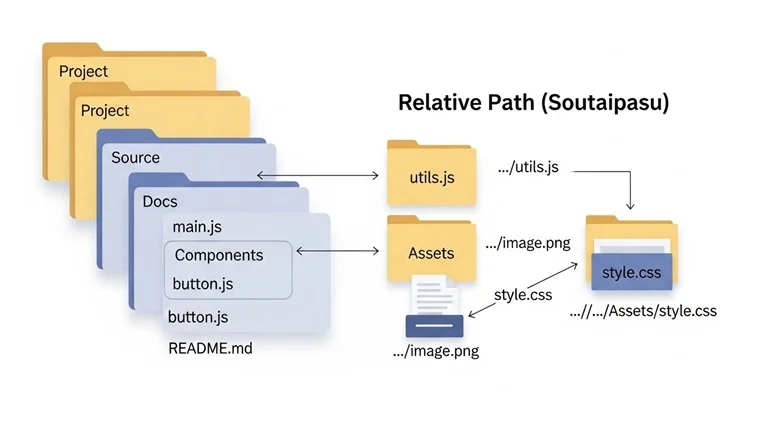
The word soutaipasu looks simple, yet it has created confusion across the internet. Some websites describe it as a programming term, others explain it as a lifestyle or wellness concept, while a few even connect it to food and cultural balance. Because of this mixed usage, readers often struggle to understand the real meaning of soutaipasu.
This article clears that confusion by explaining what soutaipasu actually means, how it is used in real-world applications, and why context is everything when working with this term.
What Does Soutaipasu Actually Mean?
In its original and most accurate form, soutaipasu is a Japanese technical term that translates to “relative path.” It is mainly used in programming, web development, and file system navigation.
The confusion begins when the same word is reused in non-technical content as a metaphor for balance or harmony. While these interpretations may sound meaningful, they are not the original definition of soutaipasu.
To put it simply:
-
Primary meaning: A relative path used in computing
-
Secondary meaning: A symbolic or metaphorical concept used in lifestyle or cultural writing
Understanding this difference helps avoid misunderstanding and improves both technical accuracy and SEO clarity.
Linguistic Roots of the Term “Soutaipasu”
The term soutaipasu is formed by combining two Japanese elements:
-
Soutai (相対) – meaning relative
-
Pasu (パス) – a Japanese adaptation of the English word path
Japanese technical language frequently adapts English computing terms, and soutaipasu is a perfect example of this practice. Its usage is officially recognized in technical education, documentation, and software development environments in Japan.
Soutaipasu in Computing and Web Development
Understanding Relative Paths in Simple Words
A relative path defines a file’s location based on where you currently are within a folder structure. Instead of pointing to the full address of a file, it shows the path relative to the current file.
This method is widely used in:
-
Website development
-
Software projects
-
File linking systems
Relative paths make projects easier to move, copy, or deploy without breaking links.
Soutaipasu vs Absolute Path (Zettai Pasu)
A common beginner question is the difference between soutaipasu (relative path) and zettai pasu (absolute path).
| Aspect | Relative Path (Soutaipasu) | Absolute Path |
|---|---|---|
| Depends on file location | Yes | No |
| Easy to move projects | Yes | No |
| Common in web projects | Very common | Limited |
| Risk of broken links | Lower | Higher |
Because of flexibility and portability, developers usually prefer soutaipasu when working on websites and shared projects.
Practical Soutaipasu Examples
HTML Example
CSS Example
JavaScript Example
These examples show how relative paths keep files connected without relying on fixed system locations.
Why Soutaipasu Is Preferred by Developers
Developers rely on soutaipasu because it:
-
Keeps file linking clean
-
Improves project portability
-
Supports teamwork
-
Reduces deployment errors
From an SEO perspective, relative paths also help maintain consistent site structure, which improves crawling and indexing.
Cultural and Non-Technical Interpretations of Soutaipasu
Soutaipasu in Lifestyle and Food Content
Some blogs describe soutaipasu as a balance-based philosophy, often linking it to traditional eating habits or mindful living. These articles focus on:
-
Balanced meals
-
Cultural harmony
-
Conscious lifestyle choices
While these ideas are interesting, they represent creative usage, not the original meaning of the term.
Soutaipasu as a Wellness Concept
In wellness writing, soutaipasu is sometimes presented as a way of maintaining emotional or mental balance. Authors use the idea of “relative positioning” to describe how people manage stress and priorities.
This interpretation works as a metaphor, but it should never replace the technical definition.
Why Soutaipasu Causes SEO Confusion
Because different industries use the same keyword, search engines show mixed results. This happens when:
-
Writers don’t clarify intent
-
Articles ignore the original definition
-
Content targets multiple audiences without structure
High-quality content must clearly explain which version of soutaipasu it is discussing.
When Should You Use the Term Soutaipasu?
-
For coding and development: Use soutaipasu to describe relative paths
-
For education: Teach it as a technical concept
-
For lifestyle content: Only use it metaphorically with clear explanation
Using the term correctly builds trust, authority, and search relevance.

Advantages and Drawbacks of Soutaipasu
Benefits
-
Flexible project structure
-
Easy file management
-
Ideal for scalable development
-
Beginner-friendly once understood
Limitations
-
Can fail if folder hierarchy changes
-
Requires understanding of directory structure
-
Not ideal for external file linking
Knowing both sides helps developers decide when to use relative paths effectively.
Frequently Asked Questions
Is soutaipasu a real Japanese word?
Yes, it is a legitimate technical term used in computing.
Does soutaipasu mean balance or philosophy?
Only metaphorically in non-technical content.
Why do websites explain soutaipasu differently?
Because the keyword is reused across unrelated topics without context.
Final Conclusion
At its core, soutaipasu means relative path, a fundamental concept in programming and web development. While cultural and wellness interpretations exist, they are secondary and symbolic. Understanding the correct context allows you to use the term accurately—whether you are writing content, learning to code, or optimizing websites.






Leave a Reply